


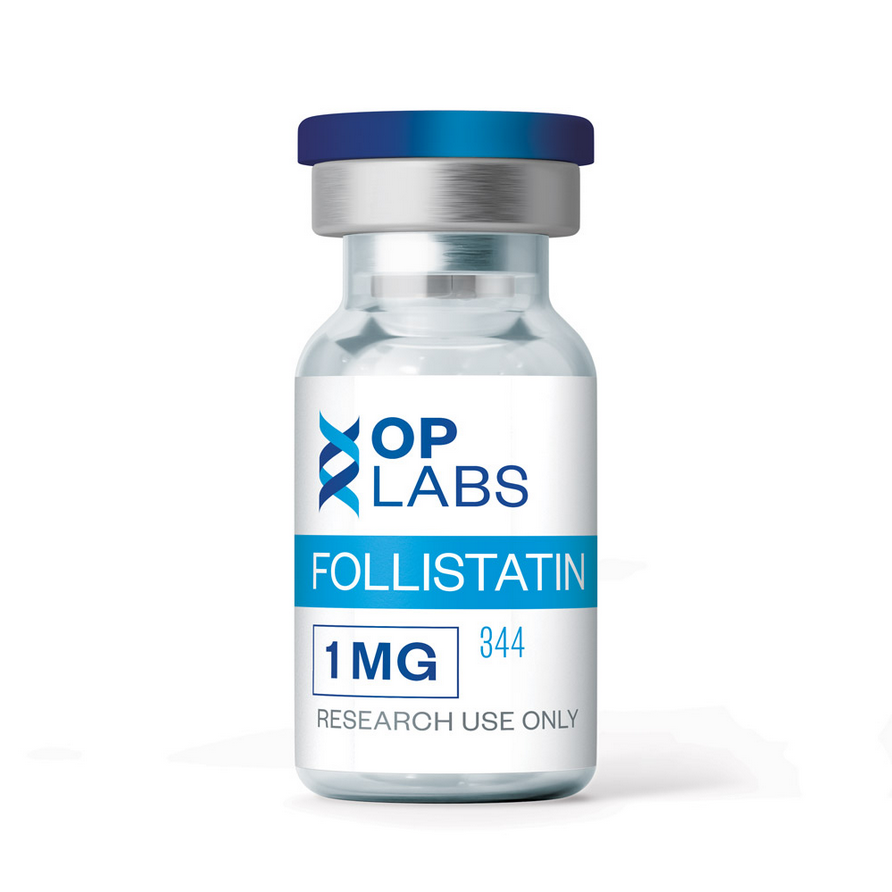
Follistatin 344
£74.00
Follistatin 344
Follistatin 344 is a synthetic recombinant peptide derived from the naturally occurring follistatin protein, a regulatory glycoprotein involved in muscle growth, tissue repair, and cellular signaling pathways. It has gained significant attention in scientific research for its ability to interact with myostatin and activin, two proteins that regulate muscle development and cellular growth processes.
Follistatin is naturally produced in multiple tissues throughout the body and plays an important role in balancing growth and differentiation signals. The Follistatin 344 variant is specifically studied for its potential effects on skeletal muscle growth, recovery, regeneration, and body composition.
Due to its influence on myostatin signaling, Follistatin 344 has become a prominent research peptide in muscle biology, regenerative medicine, and performance-related studies.
Follistatin 344 primarily works by binding to and inhibiting myostatin, a member of the transforming growth factor-beta (TGF-β) family that acts as a negative regulator of muscle growth. By reducing myostatin activity, the peptide may promote increased muscle-cell growth and differentiation.
The peptide also interacts with activin proteins, which are involved in inflammation, tissue remodeling, reproductive signaling, and cellular regulation.
Research suggests Follistatin 344 may help:
- Inhibit myostatin signaling
- Promote muscle-cell growth and differentiation
- Support tissue repair and regeneration
- Influence recovery pathways
- Modulate cellular growth signaling
Its broad regulatory role has made it an important compound in advanced muscle and regenerative research.
Key Features
- Myostatin Inhibition Research – Investigated for reducing myostatin activity linked to muscle-growth limitation.
- Muscle Growth Support – Studied for effects on muscle hypertrophy and recovery pathways.
- Regenerative Research Applications – Explored in tissue repair and cellular regeneration studies.
- Growth Signaling Modulation – Interacts with activin and TGF-β pathways.
- High-Purity Formulation – Produced under strict laboratory and quality-control standards.
Research Applications
Follistatin 344 has been explored in studies involving:
- Skeletal muscle growth and hypertrophy
- Muscle-wasting and atrophy research
- Recovery and tissue-regeneration studies
- Myostatin pathway inhibition
- Age-related muscle decline
- Exercise and performance physiology
- Cellular differentiation research
- Fibrosis and tissue-remodeling studies
Its potential ability to regulate muscle-growth pathways has made it a widely discussed peptide in regenerative and performance-related research.
Product Specifications
- Product Name: Follistatin 344
- Abbreviation: FST-344
- Peptide Type: Recombinant follistatin peptide/protein fragment
- Sequence Length: 344 amino acids
- Appearance: White lyophilized powder
- Purity: Typically ≥95–98% (supplier dependent)
- Storage: Refrigerated or frozen storage recommended
- Use: Intended for laboratory and research applications only
Benefits Being Investigated
Current scientific research suggests Follistatin 344 may potentially:
- Support muscle-growth pathways
- Promote recovery and regeneration
- Influence muscle-cell differentiation
- Reduce myostatin activity
- Support lean body composition research
- Aid studies involving age-related muscle decline
Important Context
Follistatin 344 remains an investigational research compound and is not approved for general medical or performance-enhancement use. Most evidence currently comes from animal studies, cellular research, and limited experimental investigations.
An important consideration is that myostatin inhibition can affect multiple biological systems beyond skeletal muscle, including connective tissue, metabolism, and organ signaling pathways. Because of this, long-term safety and systemic effects are not yet fully understood.
Follistatin 344 is therefore best described as a regulatory growth-signaling peptide under active scientific investigation rather than a clinically established muscle-building therapy.
Be the first to review “Follistatin 344”
Related products
weight Loss & Fat Burners


weight Loss & Fat Burners

weight Loss & Fat Burners
weight Loss & Fat Burners

weight Loss & Fat Burners
weight Loss & Fat Burners

weight Loss & Fat Burners

weight Loss & Fat Burners
Reviews
There are no reviews yet.